BulletDraw

Solutions · Lenders

Draws that took days, now in minutes.Every package read, every risk found, one verdict on top.

Live on your queue

Too many packages to check? Let BulletDraw read them first.

A package in and read on arrival, an invoice that did not match its check flagged and cleared, the waivers counted and the risk re-scored — ready for your decision.

Loan risk-assessed
Every
Loan risk-assessed
Review signals
20
Review signals
Invoice beside its check
1 : 1
Invoice beside its check
An account per lender
By invite
An account per lender

Live · First Harbor Bank · review queue

A lender in a grey blazer

Loan risk

Harbor Point loan

Last scored at Draw #4 · low

Lien waivers

0 of 15 waivers

Arrive with the package

Review signals

20 signals ready

Waiting on the package

Draw package

Harbor Point · Draw #5

Arrived

$0

Draw #5 on its way

From the builderInvoices matched 0/12

Just now

  1. 9:00 am. A package is on its way.
BulletDraw for lenders, in numbers

Days of checking. Gone in minutes.

The package arrives already read and its risks already found, so the part of your week that went on chasing paperwork, ticking lines and hunting for problems comes back to you.

See the risk on site.

0123456789 min

to check the site against the claim — billed beside what the inspector verified, in photos and video — down from an hour

Review every package faster.

01234567890123456789X

faster package review — six hours of checking down to fifteen minutes

Get your team's time back.

012345678901234567890123456789h

back every month on a book of forty draws

Decide the same day.

Same day

draw approvals — from package to a decision you can defend, down from three days

Save at scale.

Millions

in savings across your loan book — staff hours back on every draw, and bad draws caught before they fund

Where the days went

The same draw, without the busywork.

Every task a draw used to cost you, and what is left of it now.

One draw, task by task

The old way With BulletDraw

Before → after

  • Chasing missing documents

    Waivers, W-9s and certificates arrive with the package

    2 days→Done for you
  • Matching invoices to checks

    Each invoice already sits beside the check that paid it

    2h 30m→Done for you
  • Reconciling the SOV and retainage

    Every line foots; retainage carried across every draw

    1h 30m→Done for you
  • Checking the site against the claim

    Billed % beside the inspector's, with photos and video per phase

    1 hour→5 min
  • Assessing the risk and deciding

    The loan's risk scored with its reasons, then one verdict — hold, review or ready

    1 hour→10 min

Every draw

Two days of waiting and 6 hours of checking, down to 15 minutes of reading and deciding.

3 days→15 min

The draw dashboard

Every package read. Every problem found.

A package arrives and is read before you open it — its risks identified and the loan's risk assessed, compliance checked, every dollar proven, budget violations indicated, the site checked against the claim — and then it waits for the one decision that is yours.

How it reaches you

An invite, a dashboard, a decision.

No implementation, no IT ticket. The borrower runs on BulletDraw; you get the account and the read.

  1. 01

    An invite by email

    The borrower names you as the lender on a project and sends the first package. You get an account from the invite. It owns the packages sent to you and nothing else.

  2. 02

    The package opens as a dashboard

    Twenty review signals — does the schedule of values foot, does retainage reconcile across draws, are the conditional waivers signed, does each invoice match its check — fold into one verdict: hold, review or ready.

  3. 03

    Read every line

    The schedule of values with every line, this draw against previously funded and retainage, and each invoice beside the check that paid it, with the documents streamed on the page.

  4. 04

    Check the site against the claim

    Percent complete per phase as the builder billed it, next to what the inspector verified. Site photos and videos from the inspector, filed per phase. Every change order on the job.

  5. ✓

    Record your decision

    Your remarks and decision go on the draw. The borrower tracks them on the last step of the wizard and releases payments and unconditional waivers once you fund.

Tower cranes over a city skyline in a golden haze
Construction lending

Capital that builds cities. Read before it moves.

Automation agents

Six agents read every package before you do

They read, check, match and score — and hand you the decision. Nothing is approved or funded by a model.

  1. Every package arrives as data, not a PDF — the schedule of values, each invoice, the check that paid it, the waivers, the photos and every prior draw on the loan, read before you open it.

    A morning with a 200-page PDF

  2. Insurance certificates, W-9s, licences and lien waivers checked for every payee on the draw — and a lapse flagged on its own, before the money moves.

    Chasing certificates by email

  3. Each invoice is set beside the check that paid it — payee, amount and clearing matched — so every dollar you fund has its proof on the page.

    Ticking invoices against a check register

  4. Every line of the schedule of values against its budget, approved change orders and contingency — an over-run indicated the moment it appears, not at closeout.

    Re-footing the SOV by hand

  5. Percent complete as the builder billed it, beside what the inspector verified and the photos from site — the gap shown per phase, with a suggested hold.

    A site visit for every draw

  6. Every loan on your book scored — money drawn against time gone, flags raised, cadence kept — with the reasons shown, and the reports your committee asks for built from the same read.

    A spreadsheet rebuilt every month

Every result waits for a person to confirm. Nothing is approved, submitted or paid by AI.

What you get

Every risk found. Before you say yes.

Risk assessed on every loan and identified in every package, one platform for all of them, the analysis done, compliance, budget and the site checked in photos and video, and the reports your committee asks for. Sign up for BulletDraw and live a stress-free life.

  1. Risk assessment, loan by loan

    Every loan in your book is scored the same way, every time a package lands — money drawn against time gone, the site against the claim, the draw cadence kept, the flags raised — and the reasons sit beside the score, so you can see why a loan moved before you pick up the phone. Elevated, watch or low: the loans that need a visit rise to the top, and the ones on pace stay quiet.

    Every loan scoredReasons shownWatch list
  2. Risk identified the moment it appears

    You should not have to read a package to learn it carries a risk. Every package is checked the moment it arrives, and every risk in it — a lapsed insurance certificate, a line billed past its budget, a phase billed ahead of the inspector, a draw late against its cadence — is identified, named and ranked worst first, across every loan you hold.

    Identified on arrivalWorst firstEvery loan
  3. One platform for every draw package

    Every package from every builder you fund arrives in one queue, not scattered across inboxes — oldest first, with what you have approved and what you sent back beside it. Each opens as the same dashboard, in the same order, whoever the builder is.

    Every builderOne queueBy invite
  4. Detailed analysis, already done

    Twenty review signals run on every package: does the schedule of values foot, does retainage reconcile across every prior draw, are the conditional waivers signed, does each invoice match the check that paid it. They fold into one verdict — hold, review or ready — and every number traces back to the document behind it.

    20 signalsOne verdictEvery number traceable
  5. Compliance issues, identified automatically

    Every payee on the draw is checked for a current insurance certificate, a W-9, a licence and a signed conditional waiver. A lapse is caught before the money moves — and each invoice sits beside the check that paid it, with payee, amount and clearing matched, so the proof is on the page rather than in a request to the builder.

    COI · W-9 · waiversInvoice beside its checkProof on the page
  6. Budget violations, indicated

    Every line of the schedule of values is held against its budget, the approved change orders and the contingency. A line billed past its budget with no change order to cover it is lit up — with the amount — before you sign, not discovered at closeout.

    Every lineChange orders countedBefore you sign
  7. The site, in photos and video

    Inspectors add site photos and videos to every visit, filed against the phase they show. Percent complete as the builder billed it sits beside what the inspector verified, and the pictures sit beside both — so a phase billed ahead of the work is something you can see, not something you take on trust.

    Photos & videoFiled per phaseBilled vs verified
  8. Reports your committee asks for

    What you have funded, which builders it went to, how each loan is pacing and how long you actually take from opening a package to releasing the money — built from the same read as the dashboard, so the report and the draw never disagree.

    Per builderPer loanYour turnaround
Loan oversight

Built for the whole life of the loan.

Beyond the draw in front of you: whether the loan stays in balance, whether its covenants hold, when the inspector goes out, what looks wrong across every borrower — and exactly what is held back, and why.

Cost to complete & loan-in-balance

What is left to build against what is left to draw, forecast from each line's pace — and a warning when a loan is heading out of balance, months before the last draw.

Covenant & maturity alerts

Your loan terms held against the job — completion, maturity, reserves, reporting and insurance — with an alert before a covenant is broken, not after.

Inspection scheduling

Order the inspection from the draw, send the inspector a link with the phases to verify, and the readings land on the dashboard on their own.

Anomaly detection across borrowers

The same invoice in two packages, a vendor paid twice, a price far outside your market, a draw off its cadence — patterns you can only see when every builder you fund is in one place.

Holdbacks & fund control

Retainage and conditional holds kept as a ledger per loan, released only on the conditions you set — with the audit trail your examiners ask for.

The people behind the money

Lenders who fund what gets built.

Loan officers, credit committees, inspectors and the builders they back — one read of every draw, shared by all of them.


A credit team reviewing a loan file around a table
A loan officer going over documents with a borrower
A smiling banker in a suit
A lender in her office
Two bankers shaking hands
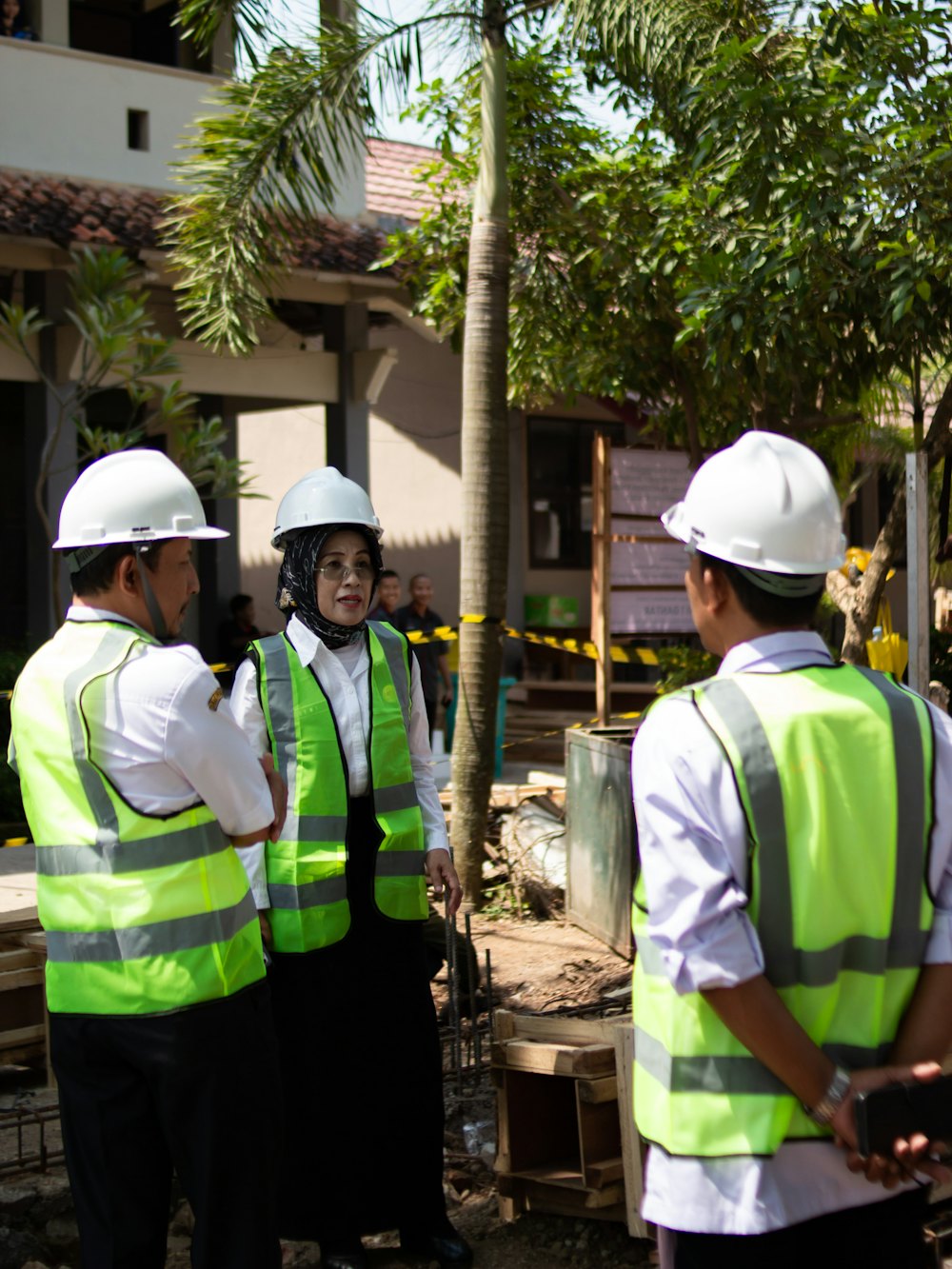
An inspection on site, in hard hats and vests
A senior banker meeting a client
One document

The entire site. One document.

Everything the draw depends on — the money, the proof, the paperwork and the site itself — in one package, opened as a dashboard or downloaded as a document for your file.

  • ✓The cover — the draw, the money, the verdict and its conditions
  • ✓The schedule of values — every line, previously funded, this draw, retainage, what is left
  • ✓Every invoice beside the check that paid it, with the proof controls
  • ✓Lien waivers, W-9s and insurance certificates for every payee
  • ✓Percent complete per phase — as billed, and as the inspector verified
  • ✓Site photos per phase, the inspection checklist and every change order
  • ✓The builder's sworn certification — and every prior draw on the loan
Your own template

Your form. Your rows. Filled every draw.

The dashboard is the read. The template is what goes in your file. Both come from the same figures, so they never disagree.

See it on a real draw →
  • ✓Your Excel draw form is uploaded once by the borrower and filled every draw.
  • ✓Previously funded and retainage are carried per line and rolled up to your rows.
  • ✓Works with any lender's format — bank, credit union, private or hard-money.
  • ✓Lien waivers on the statutory form for the project's state: five types, 200 forms across all 50 states, signed electronically.
  • ✓The unconditional waiver is released only when the ACH settles, never before.

Built for every lender. Any template.

Your borrowers run on BulletDraw. You get the dashboard, your own template filled, and a decision you can defend.

Works with any lender · Subs answer from a link